Water leaking? Close the main water valve, then open a faucet on the lowest floor. Smell gas? Get everyone out first, without flipping any switches, and call the gas utility or 911 from outside.
1
It controls every drop coming into the house. For a burst pipe, a leaking water heater, or a toilet that won’t stop running, it’s the first thing to turn.The main water shutoff
Where to look
Start where the water line enters the house: usually the basement, crawl space, or utility room wall that faces the street, often near the water heater or the water meter. In homes built on a slab it can be in the garage, a closet, or under the kitchen sink. In warm climates it’s often outside, on an exterior wall or in a small ground box near the foundation. Your home inspection report usually says where it is.Gate valve or ball valve
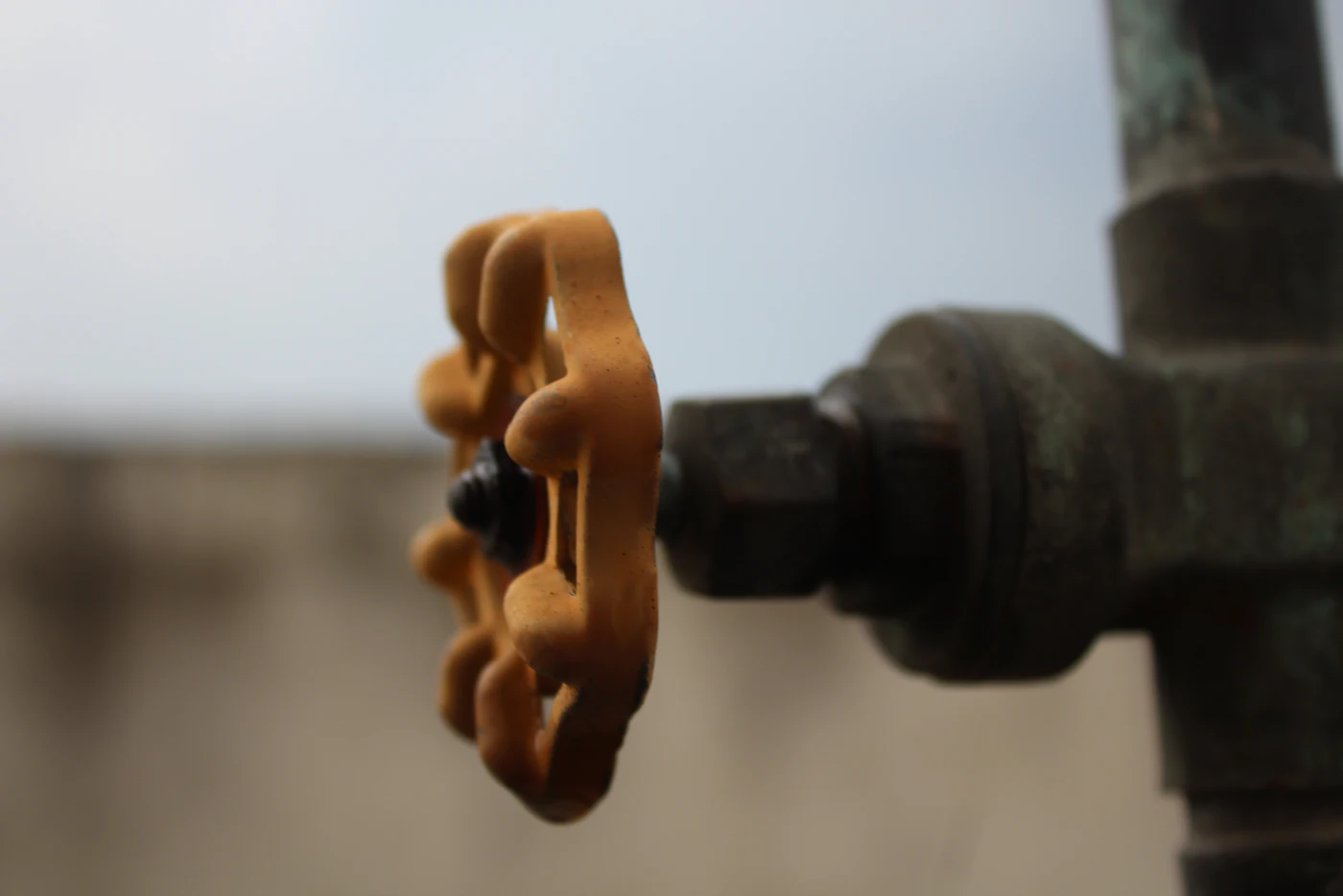
A round wheel handle is a gate valve: turn it clockwise until it stops, which can take several turns. A lever handle is a ball valve: a quarter turn, and it’s off when the lever sits crosswise to the pipe. Old gate valves can seize or snap if you force them. If one won’t budge, use the street shutoff and have the valve replaced with a ball valve.If the house valve fails, use the street shutoff
The utility’s shutoff is usually in a box near the street or sidewalk, often with the water meter. Opening it takes a meter key or curb key, and some utilities ask you to call them instead of turning it yourself. Find out which yours is before you need it.On a well
Switch off the well pump at its breaker, then close the valve on the line just after the pressure tank.After it’s off, drain the lines
Open a faucet on the lowest floor to let the water left in the pipes run out and take the pressure off the leak.Exercise it once a year
Close and reopen the main valve once a year so it doesn’t seize. If it drips at the stem or won’t close all the way, have it replaced now, while it isn’t an emergency.2
Most leaks don’t need the whole house shut down. Every toilet, sink, and water appliance should have its own valve, and each one should actually turn.Fixture shutoffs
Sinks and toilets
Small oval handles on the supply lines under each sink and behind each toilet. Turn clockwise to close. If one won’t turn, or leaks once it does, replace it with a quarter-turn valve before the day you need it.Washing machine
Two valves, hot and cold, on the wall behind the machine. Rubber supply hoses are a classic cause of flooded laundry rooms: replace them with braided stainless hoses, and replace those every five years.Water heater
The cold-water line into the top of the tank has its own valve. Close it to stop feeding a leaking tank, then turn off the heater’s gas or power.How long does a water heater last?Fridge and dishwasher
The fridge’s ice maker line usually has a small valve under the kitchen sink or behind the fridge. The dishwasher usually shares the hot-water valve under the sink.Outdoor faucets
Each one usually has an indoor shutoff behind the wall it comes through. Close them before the first freeze.How to winterize a house3
If you smell gas, leave first: get everyone out, don’t flip switches or light anything, and call the gas utility or 911 once you’re outside. The meter valve is for emergencies like a fire, or when the utility or fire department tells you to use it.The gas shutoff
Where it is
On the gas pipe where it comes out of the ground, just before the meter. The valve is a small rectangular tab on the pipe.How to turn it off
Use a 12- to 15-inch adjustable wrench or a gas shutoff wrench to turn the tab a quarter turn, so it sits crosswise to the pipe. Keep the wrench next to the meter, because nobody should have to search for it.Don’t turn it back on yourself
Once the gas is off at the meter, the utility or a licensed technician turns it back on, checks for leaks, and relights the pilot lights.Appliance valves
The stove, dryer, furnace, and water heater each have a gas valve on the line behind them. The handle points along the pipe when it’s on and crosswise when it’s off.Propane
On a propane tank, close the service valve on top of the tank by turning it clockwise.4
For electrical work, a sparking outlet, or water near wiring.The main breaker
Where it is
The electrical panel is usually in the garage, basement, utility room, or a hallway closet. The main breaker is the large one at the top, labeled MAIN or with the panel’s rating, like 100 or 200. Some homes have their main disconnect outside next to the meter instead, and newer homes often have both.How to turn it off
Flip the main breaker firmly to OFF, which cuts power to every circuit. To work on one circuit, switch off just its breaker, then confirm the power is actually off with a voltage tester before you touch anything.Never reach for a panel from standing water
If the panel is in a flooded space, or you’d have to stand in water to reach it, stay out and call the electric utility to cut the power.Label every breaker
An hour with a helper and an outlet tester is enough to map which breaker runs what. Write it on the panel door, because in an emergency nobody has time to guess.5
Do this once, on a calm day, and the worst ten minutes of homeownership get a lot shorter.